Table of Contents
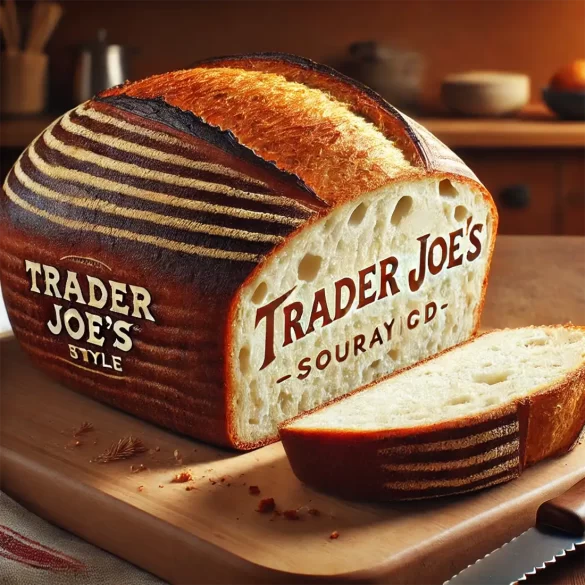
If you’re a fan of Trader Joe’s sourdough bread, you’re not alone! This tangy, chewy, and perfectly crisp loaf has won the hearts of many. But did you know you can make your own homemade Trader Joe’s sourdough bread right in your kitchen? With just a few ingredients and some patience, you can achieve that signature crust and delicious, airy crumb.
In this guide, we’ll walk you through a Trader Joe’s sourdough bread recipe, from feeding your starter to baking a golden, crusty loaf. Let’s dive into the step-by-step process of creating this classic bread!
Why You’ll Love This Homemade Trader Joe’s Sourdough Bread
- No artificial additives: Unlike store-bought bread, this homemade version contains just natural ingredients—flour, water, and salt.
- Superior flavor: Long fermentation develops a rich, tangy taste that surpasses commercial loaves.
- Perfect crust: The high-temperature baking method creates that signature crispy crust with a tender, airy crumb.
- Health benefits: Naturally fermented sourdough is easier to digest and has a lower glycemic index than regular bread.
Now that you know why this bread is worth making, let’s gather our ingredients!

Ingredients for Homemade Trader Joe’s Sourdough Bread
Essential Ingredients:
- 500g (3 ½ cups) bread flour – High-protein flour creates a better gluten structure.
- 100g (½ cup) active sourdough starter – A well-fed, bubbly starter ensures a good rise.
- 10g (2 tsp) salt – Enhances flavor and strengthens gluten.
- 350g (1 ½ cups) filtered water – Hydrates the dough and aids fermentation.
Optional Additions for Extra Flavor:
- 1 tbsp honey – Adds a subtle sweetness.
- 2 tbsp olive oil – Makes the crumb slightly softer.
- Sesame or poppy seeds – For a crunchy topping.
Step-by-Step Trader Joe’s Sourdough Bread Recipe

1. Feed Your Sourdough Starter (If Needed)
If your sourdough starter has been in the fridge, feed it 6-12 hours before making the dough. It should be bubbly and active when used.
2. Mix the Dough
In a large bowl, combine:
- 350g water
- 100g sourdough starter
- 500g bread flour
Mix until no dry spots remain. Let it rest for 30-45 minutes (autolyse).
3. Add Salt and Knead
Sprinkle 10g salt over the dough. Gently knead or stretch and fold it several times. Let it rest for 30 minutes.
4. Bulk Fermentation (4-6 Hours)
Let the dough rise at room temperature (21-24°C or 70-75°F) for 4-6 hours, folding it every 30 minutes to build strength.
5. Shape the Dough
Lightly flour your work surface. Shape the dough into a round or oval loaf. Place it in a floured proofing basket or bowl, seam side up.
6. Cold Fermentation (Overnight)
Cover the dough and refrigerate it for 12-24 hours. This step enhances flavor and improves crust texture.
7. Preheat the Oven & Bake
- Preheat your oven to 475°F (245°C) with a Dutch oven inside.
- Once hot, carefully place the dough onto parchment paper and into the Dutch oven.
- Cover and bake for 25 minutes, then uncover and bake for another 20 minutes until golden brown.
8. Cool & Enjoy!
Let the bread cool for at least 1 hour before slicing. This allows the crumb to set properly.
Serving Suggestions
Pair your homemade Trader Joe’s sourdough bread with:
- Avocado toast: Top with mashed avocado, lemon juice, and chili flakes.
- Sourdough grilled cheese: Crisp, buttery crust with melty cheese inside.
- Classic bruschetta: Diced tomatoes, basil, and balsamic glaze on toasted slices.
- Sourdough sandwich: Load with turkey, cheddar, and greens for a wholesome lunch.
Recipe Variations & Customizations
Gluten-Free Option
Use a gluten-free sourdough starter and a 1:1 gluten-free flour blend. The dough will be softer, so use a loaf pan for better structure.
Whole Wheat Sourdough
Replace 50% of the bread flour with whole wheat flour for a more rustic, hearty flavor.
Seeded Sourdough
Mix in flaxseeds, sesame seeds, or sunflower seeds for added texture.
Cheesy Garlic Sourdough
Add shredded cheese and minced garlic into the dough before shaping for a savory twist.
Ingredients Substitutes & Alternatives

If you don’t have certain ingredients on hand or need a dietary-friendly option, here are some great substitutions:
1. Flour Alternatives
- Whole Wheat Flour: Replace up to 50% of bread flour for a heartier loaf.
- All-Purpose Flour: Works but may result in a softer crust and slightly lower rise.
- Gluten-Free Flour Blend: Use a 1:1 gluten-free blend for a gluten-free sourdough. Note: A gluten-free starter is required.
2. Sourdough Starter Substitute
- Commercial Yeast: If you don’t have a sourdough starter, use ¼ teaspoon instant yeast per 500g of flour and let the dough ferment for 6-8 hours. It won’t have the same tangy flavor but will still make good bread.
- Preferment (Poolish or Biga): Mix equal parts flour and water with a pinch of yeast, ferment overnight, and use as a starter alternative.
3. Water Alternatives
- Milk (Dairy or Non-Dairy): Replacing water with milk (or oat/almond milk) results in a softer crust and richer taste.
- Beer: Using beer instead of water can enhance the bread’s depth of flavor.
4. Salt Alternatives
- Sea Salt or Himalayan Salt: Adds extra minerals and a slight flavor variation.
- Low-Sodium Option: Reduce salt by 25% or use a salt substitute.
5. Add-Ins for More Flavor
- Honey or Maple Syrup (1 tbsp): Adds subtle sweetness and helps caramelization.
- Olive Oil (2 tbsp): Makes the crumb softer.
- Seeds & Nuts: Chia seeds, sunflower seeds, or walnuts add texture and nutrients.
- Herbs & Spices: Garlic powder, rosemary, or black pepper can enhance flavor.

Recipe Tested & Notes
I tested this recipe several times using an active 100% hydration sourdough starter and high-protein bread flour to recreate the texture of Trader Joe’s sourdough bread. The biggest difference between an average loaf and a bakery-quality loaf was giving the dough enough time to ferment naturally.
During testing, I found that an overnight cold proof produced the best flavor and the most attractive oven spring. The crust became crisp without being overly hard, while the inside stayed soft with a light, chewy texture that’s perfect for sandwiches or toast.
If your kitchen is cooler than 70 degrees Fahrenheit (21 degrees Celsius), expect the dough to take a little longer to rise. Watching the dough instead of the clock always gave me the best results.
Mistakes I Made
While testing this homemade Trader Joe’s sourdough bread recipe, I made a few mistakes that taught me valuable lessons.
- I baked one loaf before it had fully proofed. The bread looked good on the outside but was dense in the middle.
- I skipped the overnight cold fermentation once to save time. The loaf tasted fine, but it lacked the deep tangy flavor that makes sourdough so special.
- I accidentally added too much flour during shaping. The dough became tighter and didn’t develop the beautiful open crumb I wanted.
- I sliced one loaf while it was still warm. The inside became slightly gummy because the crumb had not fully set.
Learning from these mistakes helped me create a loaf that closely resembles Trader Joe’s sourdough bread.
Personal Cooking Tips Learned From Testing
After making this bread multiple times, these are the tips that consistently produced the best results:
- Feed your starter 4 to 6 hours before mixing the dough so it is at peak activity.
- Slightly wet hands work better than extra flour when handling sticky dough.
- Use a kitchen scale instead of measuring cups whenever possible for better consistency.
- Don’t rush the bulk fermentation. A well-fermented dough is easier to shape and develops better flavor.
- Preheat the Dutch oven for at least 30 minutes before baking for maximum oven spring.
- Allow the bread to cool completely before slicing. Waiting one hour makes a noticeable difference in texture.
Why I Prefer This Version
I’ve tried several sourdough bread recipes over the years, but this version has become my favorite because it balances simplicity with authentic bakery flavor.
Unlike many recipes that require complicated techniques, this one is easy enough for home bakers while still producing a crisp crust and soft, chewy interior similar to Trader Joe’s sourdough bread.
I also like that the ingredients are simple and easy to find. There are no preservatives or unnecessary additives, so every loaf tastes fresh and wholesome. Whether I’m making toast, sandwiches, or serving bread with soup, this recipe always delivers reliable results.
Storage Notes Based on Actual Testing
I tested several storage methods to see which one kept the bread tasting fresh the longest.
- At room temperature, the bread stayed fresh for about 2 to 3 days when stored in a paper bag or wrapped in a clean kitchen towel.
- A bread box kept the crust crisp while preventing the loaf from drying out.
- Storing the bread in a plastic bag softened the crust after several hours, so I only recommend this if you prefer softer bread.
- For longer storage, I sliced the loaf before freezing. Individual slices thawed quickly and toasted beautifully straight from the freezer.
- Frozen sourdough maintained its flavor and texture for up to 3 months when stored in a freezer-safe bag.
Equipment Used
Having the right tools makes homemade Trader Joe’s sourdough bread much easier to prepare.
- Large mixing bowl
- Digital kitchen scale
- Bench scraper
- Dough whisk or wooden spoon
- Banneton proofing basket (or a bowl lined with a floured kitchen towel)
- Bread lame or sharp razor blade
- Dutch oven with lid
- Parchment paper
- Cooling rack
- Instant-read thermometer (optional but helpful)
FAQs About Trader Joe’s Sourdough Bread
Can I make this recipe without a sourdough starter?
No, this recipe requires a sourdough starter. If you don’t have one, try making a yeast-based sourdough alternative.
How many calories are in a slice of sourdough bread?
Sourdough bread calories can vary depending on the size of the slice and ingredients used. On average, a homemade slice like this recipe contains around 15 calories, making it a light and nutritious option compared to store-bought loaves.
How do I store sourdough bread?
To keep sourdough bread fresh, wrap it in a clean cotton towel or place it in a paper bag and store it at room temperature for up to 2–3 days. Avoid using plastic bags, as they trap moisture and can make the crust soft and lose its crisp texture.
Can I freeze sourdough bread?
Yes! Slice and freeze in an airtight bag for up to 3 months. Toast straight from frozen.
Why is my sourdough bread too dense?
A weak starter, under-proofing, or adding too much flour can lead to dense bread. Be sure to allow proper fermentation time.
How do I revive stale sourdough bread?
Sprinkle with water and bake at 350°F for 10 minutes to restore crispiness.
Nutritional Information (Per Slice)
When it comes to sourdough bread calories, this recipe is relatively light per slice—especially when compared to store-bought sandwich bread. Thanks to natural fermentation and minimal ingredients, each slice offers a wholesome profile:

Calories: ~15
Carbohydrates: 2g
Protein: 1g
Fat: 1g
Fiber: 0.5g
Sugar: 0.5g
Sodium: ~200mg (varies based on added salt)
Final Thoughts
Making homemade Trader Joe’s sourdough bread is a rewarding process that results in a delicious, naturally fermented loaf. Whether you enjoy it fresh with butter, toasted for breakfast, or as the base for your favorite sandwich, this bread is sure to become a staple in your kitchen.
Have you tried this recipe? Let us know in the comments and don’t forget to share your baking experience! Happy baking!