Table of Contents
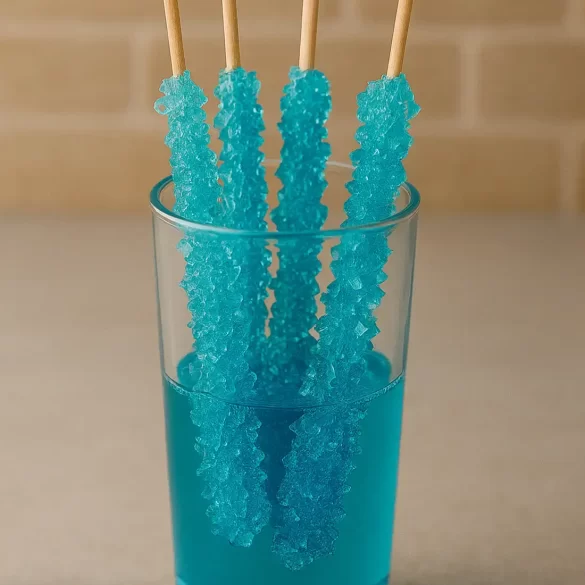
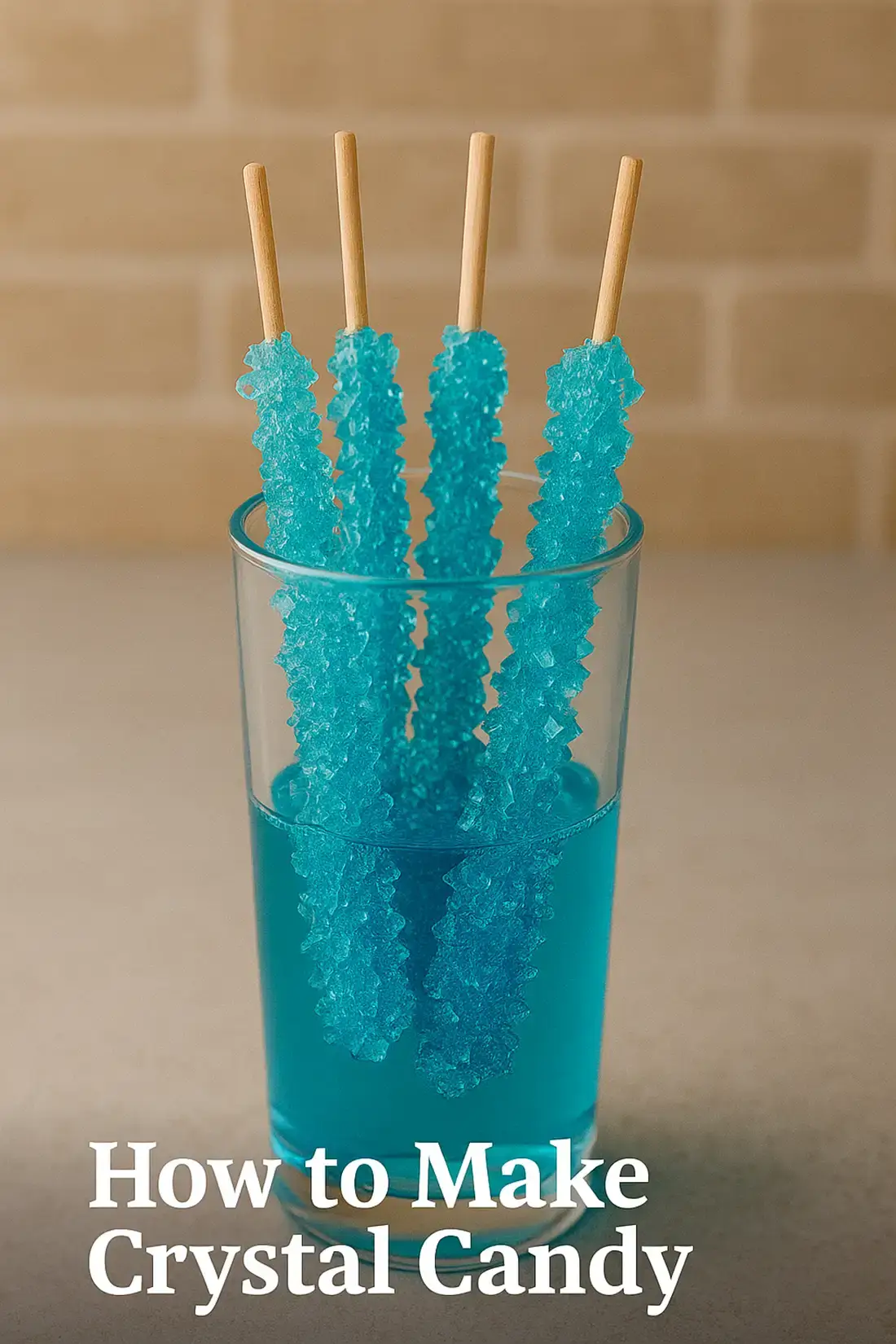
Crystal candy, also known as rock candy, is more than just a sweet treat—it’s edible science at its most beautiful. With shimmering sugar crystals that sparkle like gemstones, crystal candy is a delightful way to enjoy candy crystals while exploring the wonders of crystallization. Whether you’re a curious kid, a science teacher, or a home cook looking for a fun project, this guide on how to make crystal candy will take you through every glittering step.

What Makes Crystal Candy So Special?
Have you ever seen candy that looks like it came from a treasure chest? That’s crystal candy! Its sparkling structure forms naturally from sugar, water, and a little patience. Unlike most candies that are cooked quickly, crystal candy takes its time—growing over days into a sugary masterpiece. It’s a fun DIY activity, a great educational project, and an eye-catching party favor or gift.
The magic of candy crystals lies in the science of supersaturated solutions. By heating sugar and water together, you create a solution so packed with sugar that it can’t hold it all once it cools. The excess sugar has to go somewhere – so it latches onto surfaces and begins to form crystals. And that’s how crystal candy is born!

Whether you’re experimenting at home or just craving something sweet and stunning, this recipe will guide you through every step. Let’s make your own edible crystal garden!
Ingredients for Crystal Candy
Here’s everything you need to make crystal candy at home:

- 2 cups of granulated sugar
This is the main ingredient that forms your beautiful candy crystals. - 1 cup of water
Water helps dissolve the sugar to create a supersaturated solution. - Food coloring (optional)
Adds vibrant color to your crystal candy. Gel or liquid food coloring both work well. - Flavor extracts (optional)
Try vanilla, peppermint, or lemon to infuse your candy with delicious aroma and taste. - Wooden skewers or string
This is where your crystals will grow—like sugar stalactites! - Clothespins or clips
These hold your skewers or strings in place as crystals form. - Tall glass jars or cups
These will hold your sugar solution and give room for crystals to grow. - Paper towels
Useful for wiping any spills and covering jars to keep dust out. - Saucepan
Needed to heat and dissolve the sugar into the water.
Pro Tip: Use glass jars so you can easily see your crystals forming each day!
Step-by-Step Instructions: How to Make Crystal Candy
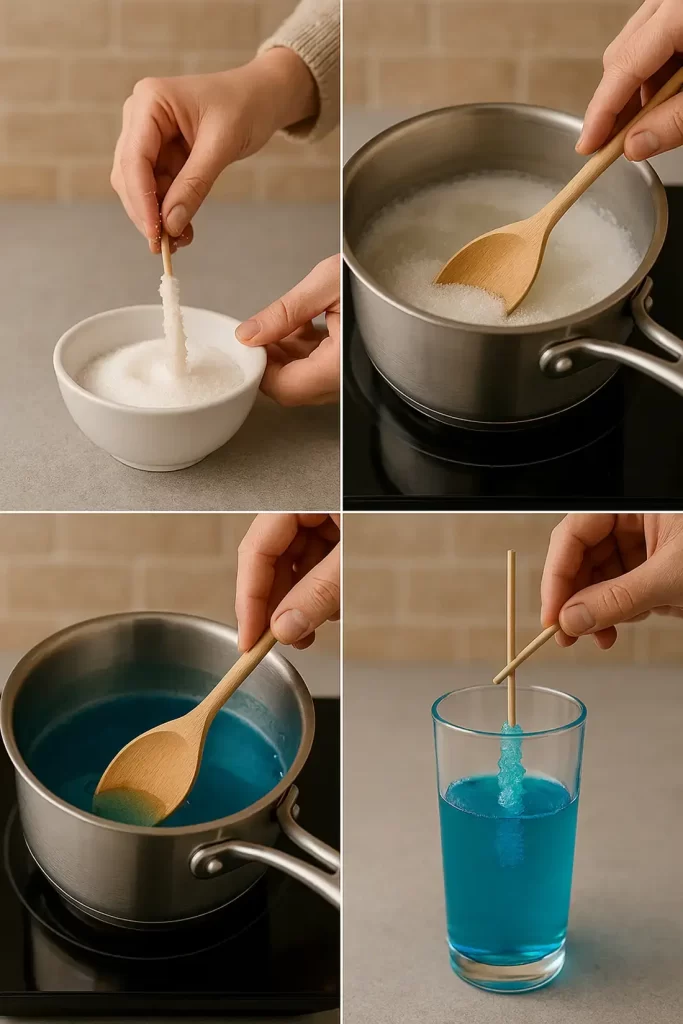
Let’s dive into the sparkly world of sugar science! Follow these steps carefully, and you’ll be rewarded with dazzling crystal candy in just a few days.
1. Prepare Your Growing Surface
- If using wooden skewers, soak them in water for 15 minutes, then roll them in granulated sugar. Let them dry completely.
- If using string, dip it in water, coat with sugar, and allow it to dry. This gives the sugar crystals something to cling to.
2. Boil the Sugar Solution
- In a medium saucepan, combine 1 cup of water and 2 cups of sugar.
- Heat over medium heat, stirring constantly until the sugar dissolves completely.
- Once the mixture begins to simmer, continue stirring for another 2-3 minutes to ensure it’s fully saturated.
For an extra-saturated solution (and bigger crystals), you can add a bit more sugar—up to 2.5 cups total—until no more dissolves.
3. Add Color and Flavor (Optional)
- Remove the saucepan from heat.
- Add a few drops of your favorite food coloring.
- Add a drop or two of flavor extract for a unique twist—think cinnamon, raspberry, or root beer.
4. Set Up the Crystallization Station
- Pour the hot sugar solution into your prepared glass jars.
- Carefully place the sugared skewer or string into the center of the jar.
- Use a clothespin to clip the stick so it hangs in the middle of the jar, not touching the sides or bottom.
Cover the jars loosely with a paper towel to keep dust out, but allow air in.
5. Wait and Watch
- Place your jars in a cool, undisturbed area (not the fridge).
- Crystals will begin forming within a few hours, but give it 5–7 days for full growth.
- Don’t move or shake the jars during this time—it can break the delicate crystals.
6. Harvest Your Crystals
- Once your crystals are large enough, carefully remove the skewer or string.
- Let it drip dry over a paper towel.
- Once dry, your crystal candy is ready to enjoy!
Pro Tips for Perfect Crystal Candy
- Use clean jars and tools: Any impurities can disrupt crystal formation.
- Be patient: Bigger crystals take time. Let them grow slowly and undisturbed.
- Avoid humid environments: Excess moisture in the air can slow or ruin crystal growth.
- Use filtered water: Tap water may contain minerals that interfere with crystal clarity.
- Don’t refrigerate: Crystals need a warm, dry environment to grow well.
Serving Suggestions
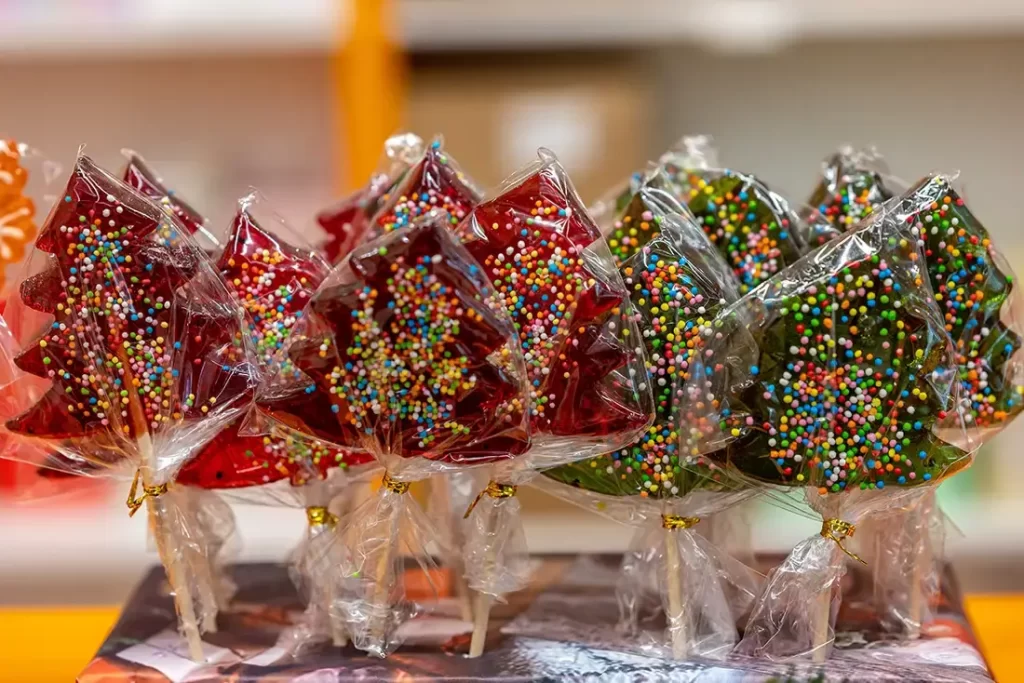
Crystal candy isn’t just for snacking—here are some creative ways to enjoy and showcase it:
- Gift It: Wrap in clear cellophane bags tied with ribbon for a sparkly homemade gift.
- Decorate Drinks: Use colored rock candy as a fun stir stick for cocktails or lemonade.
- Party Favors: Perfect for birthdays, weddings, and baby showers.
- Science Fair Projects: Show off your sugary science experiment!
Recipe Variations & Customizations
Want to take your crystal candy to the next level? Try these exciting ideas:
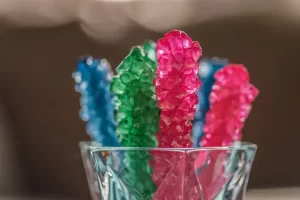
- Rainbow Crystals: Use several jars with different food coloring to grow multi-colored candy.
- Sour Candy Crystals: Add a pinch of citric acid to the solution before pouring it into jars.
- Glitter Crystals: Edible glitter added after drying gives an extra sparkle.
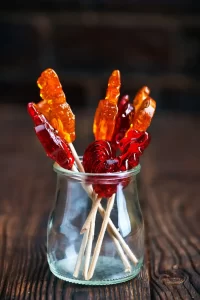
- Shapes & Sizes: Try silicone molds or grow crystals on candy sticks shaped like hearts or stars.
- Air Fryer Crystals? No need! These grow best at room temperature—no machines required.
Feeling adventurous? Experiment with flavored oils like lavender or maple for a gourmet twist.
Recipe Tested & Notes
I tested this crystal candy recipe several times using different sugar-to-water ratios, food colorings, and growing times to find the most reliable method. The version in this recipe consistently produced large, clear crystals with very little effort.
Here are my testing notes:
- A ratio of 2 cups granulated sugar to 1 cup water gave the most consistent crystal growth.
- Letting the sugar syrup cool for about 15 to 20 minutes before pouring it into the jars helped reduce unwanted crystals on the glass.
- Coating the wooden skewers with sugar before placing them in the syrup made a huge difference. Crystals started forming much faster.
- Leaving the jars completely undisturbed for 6 to 7 days produced the biggest candy crystals.
- Liquid food coloring worked just as well as gel coloring without affecting crystal growth.
- The crystals continued growing even after day 7, but after about 10 days they became so large that they started touching the sides of the jar.
Overall, this recipe proved to be reliable, beginner-friendly, and perfect for both kids and adults.
Mistakes I Made
Even though crystal candy is simple, I made a few mistakes during testing that affected the final results. Learning from these helped me improve the recipe.
I moved the jar too often
The first batch barely formed any crystals because I kept picking up the jar to check on it. Crystal candy needs a stable environment.
I skipped coating the skewer with sugar
Without sugar-coated skewers, the crystals preferred growing on the bottom and sides of the jar instead of on the stick.
I didn’t dissolve all the sugar
One test batch had tiny grains of undissolved sugar. Those grains became unwanted crystal seeds and made the final candy look rough.
I poured the syrup while it was boiling hot
Very hot syrup caused lots of crystals to form on the sides of the jar instead of on the stick. Allowing the syrup to cool slightly solved this issue.
I used a narrow glass
The crystals eventually grew into the sides of the jar, making them difficult to remove without breaking.
Personal Cooking Tips Learned From Testing
After making crystal candy multiple times, these are the small tricks that consistently gave me better results.
- Use filtered water whenever possible. The crystals grow clearer and look more like gemstones.
- Always use fresh granulated sugar. Older sugar that contains moisture may not crystallize as nicely.
- Keep the jars somewhere they won’t be bumped by children or pets.
- If you want perfectly straight crystal candy sticks, make sure the skewer hangs exactly in the center of the jar.
- A small mason jar creates thicker crystals, while taller jars create longer candy sticks.
- Light pastel food coloring creates beautiful jewel-like candy, while darker colors can hide some of the crystal sparkle.
- If you want flavored crystal candy, use concentrated candy flavoring instead of large amounts of extract so the sugar concentration stays balanced.
Why I Prefer This Version?
After comparing several methods, this has become my favorite crystal candy recipe for a few reasons.
First, it uses only a handful of inexpensive ingredients that almost everyone already has at home.
Second, the sugar concentration is easy to achieve without needing a candy thermometer, making it perfect for beginners.
I also love that this recipe produces large, sparkling candy crystals that look impressive enough for birthday parties, holiday gifts, science fairs, or homemade dessert tables.
Unlike some recipes that require corn syrup or additional ingredients, this version keeps everything simple while still delivering beautiful results.
Most importantly, the crystals grow consistently every time when the instructions are followed carefully.
Storage Notes Based on Actual Testing
Since crystal candy is almost entirely sugar, it stores surprisingly well if kept dry.
Room Temperature
Store the candy in an airtight container at room temperature.
During testing, the crystal candy stayed crisp and beautiful for over 4 weeks.
Avoid Humidity
Humidity is the biggest enemy of candy crystals.
One batch left uncovered became sticky after only two days during humid weather.
Refrigeration
I do not recommend refrigerating crystal candy.
The moisture inside the refrigerator causes the sugar crystals to soften and become sticky.
Freezing
Freezing is also not recommended because condensation forms as the candy thaws.
Best Storage Container
- Airtight glass jar
- Plastic food container with a tight lid
- Cellophane treat bags sealed tightly for gifts
Equipment Used
You don’t need any fancy equipment to make crystal candy.
- Medium saucepan
- Wooden spoon or heat-resistant spatula
- Measuring cups
- Measuring spoons
- Tall glass jars or mason jars
- Wooden skewers or cotton string
- Clothespins or binder clips
- Small bowls for sugar coating
- Paper towels
- Cooling rack (optional)
- Funnel (optional for cleaner pouring)
FAQs About Crystal Candy
How long does it take to make crystal candy?
Typically 5–7 days. Crystals start forming in a few hours, but bigger crystals need time to grow.
Can I use brown sugar instead of white sugar?
Yes, but it will change the color and flavor. Brown sugar may result in smaller or murkier crystals.
Why didn’t my crystals grow?
Possible causes include not enough sugar, impurities, or disturbance during growth. Make sure your solution is fully saturated and the jar is kept still.
Can I reuse the leftover sugar syrup?
Yes! Reheat it to dissolve any crystals and pour into a fresh jar for another round.
Is crystal candy safe to eat?
Absolutely! As long as it’s made with food-safe ingredients, crystal candy is delicious and edible.
Why didn’t my crystal candy grow?
The most common reasons are not enough dissolved sugar, moving the jar during growing, or forgetting to coat the skewer with sugar.
How long does crystal candy take to grow?
Small crystals usually appear within 24 hours, but the best crystal candy takes about 5 to 7 days. Larger crystals may need up to 10 days.
Can I make crystal candy without food coloring?
Yes. The candy will be completely clear and have a beautiful glass-like appearance.
Can I use bamboo skewers instead of string?
Absolutely. Bamboo skewers are actually my preferred option because they produce straighter and thicker crystal candy sticks.
Why are crystals growing on the jar instead of the stick?
This usually happens if the syrup is poured while it’s too hot or if the stick wasn’t coated with sugar before placing it in the jar.
Can kids make this recipe?
Yes, but an adult should handle the hot sugar syrup since it becomes extremely hot during cooking.
Can I make different colored crystal candy?
Yes. Divide the sugar syrup into separate jars and add different food colors to each one before inserting the skewers.
Is crystal candy the same as rock candy?
Yes. Crystal candy and rock candy are different names for the same homemade sugar crystal candy.
Can I add flavor to crystal candy?
Yes. Peppermint, cherry, lemon, cotton candy, raspberry, grape, and watermelon candy flavorings all work well. Add only a few drops after removing the syrup from the heat.
How long does homemade crystal candy last?
When stored in an airtight container away from moisture, homemade crystal candy stays fresh for about one month and often even longer.
Substitutes & Ingredient Alternatives
- Skewers → String or chopsticks: Any clean stick or string will work.
- Food coloring → Natural dyes: Beet juice, turmeric, or spirulina for a natural touch.
- Sugar → Xylitol? No. Sugar alcohols don’t crystallize like regular sugar—stick with sucrose.
- Flavoring oils → Extracts: Vanilla, peppermint, or almond extract are great flavor options.
Nutritional Information (Per Serving)
Serving size: 1 stick (approximately 20g of sugar crystals)
- Calories: 77
- Carbohydrates: 20g
- Sugars: 20g
- Protein: 0g
- Fat: 0g
- Fiber: 0g
Note: Crystal candy is pure sugar, so enjoy in moderation!
Final Thoughts
Making crystal candy at home is part art, part science—and all fun. From the simple joy of watching crystals form to the satisfaction of tasting your glittering creation, this recipe brings sweet rewards in more ways than one.
Whether you’re a curious cook, a DIY parent, or just craving something uniquely sweet, learning how to make crystal candy is a magical experience. The best part? You can customize it any way you like—with color, flavor, and even sparkle.
Have you tried growing your own candy crystals before? Share your experience in the comments!
If you loved this, you’ll also enjoy Taco Bell Dirty Baja Blast and Blue Raspberry Lemonade Recipe .
Don’t forget to rate this recipe and save it for later!